Bathroom Wall Panels
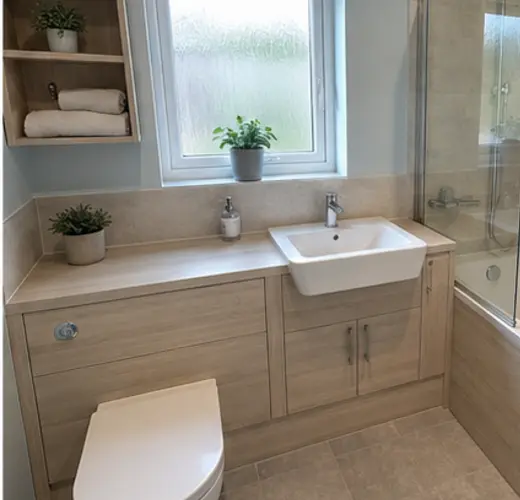
Panels cover a broad area with relatively few joints. They are popular in showers and bath surrounds where straightforward cleaning is a major priority. Stone and marble patterns offer alternatives to plain colours.
Bathroom Tiles
Tiles come in many sizes, patterns, textures and colours. Some ranges offer matching wall and floor options, while patterned tiles can be used on one wall or in a smaller area.
Think About Repair and Access
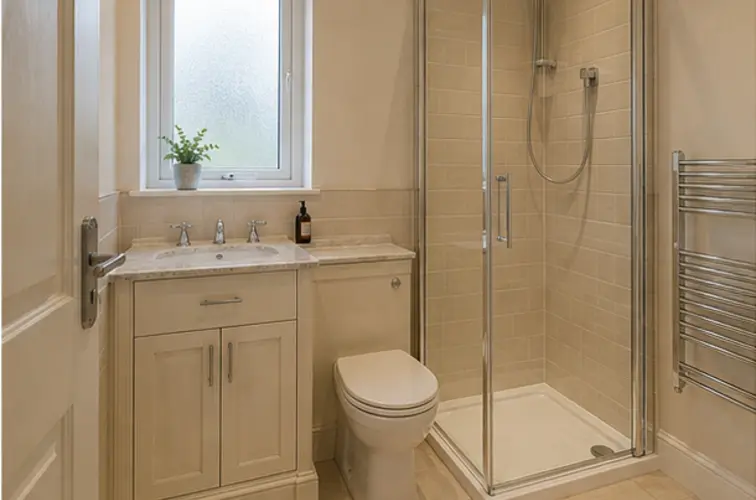
Any surface can need attention if plumbing behind it changes. Discuss how valves, concealed systems and joints can be reached or repaired before choosing a finish covering every wall.
Combine Panels With Other Finishes
Panels in the shower with paint or tile elsewhere can reduce maintenance while keeping design variety. A single material does not have to cover every wall.
Understand What Makes the Shower Watertight
The visible finish is only part of the shower wall. Panels need the correct jointing and sealing system, while tiled areas need suitable preparation and waterproofing for the products being used. Ask the fitter to explain what will sit behind the finish and how corners, pipe openings and the tray edge will be treated.
Do not choose either option on the assumption that the face of the material solves every leak risk. The full installation matters. Follow the manufacturer’s system for compatible boards, adhesives, trims and seals. If a quote leaves preparation unclear, ask for it to be listed before comparing the final prices.
Compare Cleaning Tasks Honestly
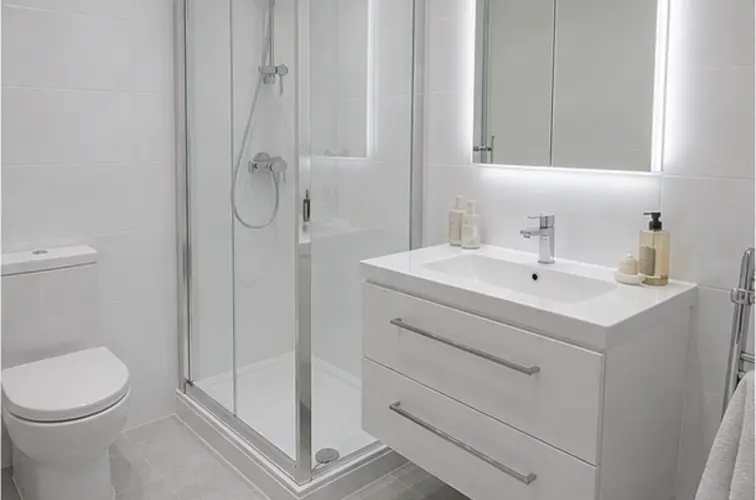
Panels normally have fewer joints than individual tiles, which can reduce the amount of grout to clean. They still need wiping, and their seals need checking. Tiles give more choices of shape and pattern, but textured surfaces and small pieces may take longer to clean than a plain larger tile.
Ask which cleaning products are suitable for the exact finish. Strong chemicals or abrasive pads can damage some surfaces and coloured fittings. Think about the shower glass, taps and corners too; changing the walls alone does not remove every cleaning task. Choose a finish you are willing and able to maintain.
Look at Full Patterns and Visible Joins
A small panel sample cannot show how a large marble or stone pattern repeats. Ask to see a larger display or the manufacturer’s full pattern image. With tiles, check the grout colour and the size of the joints as well as the tile itself.
On the room plan, mark where cuts and joins will meet the window, tray and ceiling. Very narrow pieces can look awkward and may be avoidable with different starting positions. Compare edge trims beside the taps and shower screen. These details help you judge the fitted appearance rather than deciding only from a sample held in your hand.
Leave Access for Future Repairs
A concealed shower valve or pipe connection may need attention later. Ask how it will be reached without removing a large area of finished wall. The answer depends on the product and room; an access panel or a different valve arrangement may make repairs simpler.
Keep product names, colour codes and any permitted spare material after fitting. A matching tile or panel may be difficult to obtain years later. Check storage instructions if you retain spares, and keep them somewhere dry and protected. Do not assume a damaged section can always be replaced invisibly, especially where patterns or colours vary between batches.
Compare the Complete Fitted Cost
Compare removal, wall preparation, waterproofing, materials, trims and labour. A lower material price does not necessarily mean a lower fitted price. The condition of the existing wall and the number of corners, windows or openings can affect the work.
Ask whether the quote includes making good adjoining surfaces and sealing around the tray or bath. If you want to change the material after work has begun, check the cost before agreeing. Different thicknesses and fitting systems can alter how screens, taps and edges meet. Comparing complete written quotes gives you a clearer choice than comparing a tile price with a panel price alone.
Use Different Finishes Where They Suit the Room
Panels can be used inside the shower while tiles or bathroom-suitable paint are used elsewhere. You do not have to cover every wall with the same material. Check that the joins between finishes are planned and suitable for their positions.
Choose with the whole room in view: floor, cabinet, mirror, screen and lighting. Keep the final product details with the quote and ask for the care instructions at handover. The best finish is one that gives you the appearance, cleaning routine and maintenance access you need in your own bathroom.
Check the Condition of the Existing Wall
Removing an old finish may reveal loose plaster, uneven boards or water damage. Ask how the surface will be checked and prepared for the new material. Panels and tiles both need a suitable backing; neither should be used simply to hide an unsound wall. If the fitter proposes leaving an existing surface underneath, ask why it is suitable and whether the chosen product system allows it. Keep that preparation in the written quote so the price comparison includes the work behind the finish as well as the material you will see.
For the fitting work, see Wet wall bathrooms.