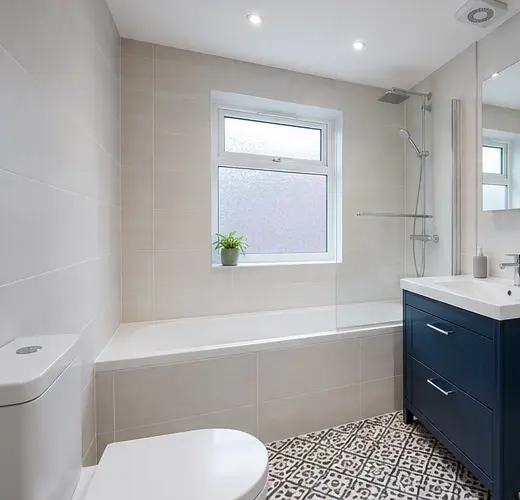
Start With Effective Extraction
An extractor fan needs to suit the room and move moist air outside. It should run during a shower and continue afterwards. A noisy or weak fan is often switched off, so performance and sound both matter.
Allow Air Into the Bathroom
A fan cannot work well in a sealed room with no replacement air. A suitable gap or planned air route may be needed for replacement air. Keep the room door closed while showering so steam does not spread through the house.
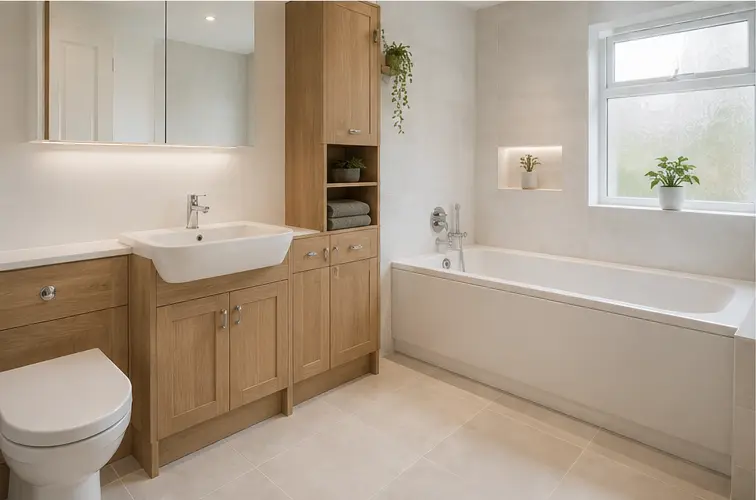
Warm Surfaces Collect Less Water
Steady background heat can help because warm walls and mirrors are less likely to collect heavy condensation. A heated towel rail also helps damp towels dry between uses.
Choose Bathroom-Suitable Finishes
Use finishes suitable for their bathroom position and level of water exposure. Wipe away heavy water after showering and deal with failed seals early rather than covering mould with paint.
Check Whether the Water Follows Showering
Notice when and where damp appears. Water on a cold window or mirror immediately after a shower may be condensation. A wet patch that stays when the room has not been used, or staining beneath a pipe, may need a different investigation. Do not assume every damp mark can be fixed by buying a larger fan.
Keep a short record of what you see and when it happens. Photographs can help explain a recurring problem to a fitter or building professional. Have persistent damp, leaks or damaged materials assessed rather than covering them with paint. The useful repair depends on the cause of the moisture.
Check Where the Fan Sends Air
An extractor needs a suitable route that carries moist air outside. Its performance depends on the complete installation, including the duct and outlet, not just the fan’s stated airflow. Ask a suitable professional to check an ineffective system, particularly where the room has no opening window.
Look for simple signs such as a clogged cover or a fan that no longer runs as expected. Follow the manufacturer’s cleaning instructions and safe isolation advice; do not reach into electrical equipment or dismantle it while powered. A blocked or poorly arranged air route may need attention beyond cleaning the visible grille.
Let the Fan Run as Intended
Some fans continue for a set period after the light is switched off, while others respond to moisture. Ask how your particular controls work and keep the instructions. Switching the fan off because it is noisy can leave steam in the room; have the noise or performance checked instead.
The room also needs replacement air for extraction to work. A suitable gap or planned air path may be part of the design. Do not block existing ventilation without advice. If you change the door, floor covering or room layout, ask whether the fan’s air supply and route outside remain suitable.
Reduce Water Left on Surfaces
After showering, remove heavy water from glass or other suitable surfaces with the method recommended for the finish. Hang towels so they can dry instead of leaving them in a wet pile. These habits can reduce moisture left in the room, but they do not replace effective ventilation.
Check seals around the bath and shower for gaps or signs of failure. Water passing through a damaged joint is a different problem from steam collecting on a cold surface. Do not cover a suspect seal with another layer and assume the issue is solved. Have the joint and any surrounding damage checked before a repair is chosen.
Keep Heating and Ventilation Working Together
Cold surfaces are more likely to collect condensation when warm, moist air meets them. Suitable heating can help the room dry, while ventilation removes moisture. Turning up heat without removing damp air may leave the underlying problem unresolved.
Ask about the room as a whole if condensation persists. The fan, air path, heating and the condition of walls or windows can all matter. Avoid blocking vents to make the room feel warmer. In older or altered homes, get advice suited to the building before changing insulation or ventilation arrangements, rather than treating one surface in isolation.
Choose Finishes for Their Actual Position
Bathroom paint, shower panels, grout and sealants have different uses. A finish suitable for a ceiling may not be suitable for a shower wall exposed to direct water. Follow the product instructions and ask the fitter to explain which preparation is needed underneath.
New finishes should not hide damp boards, damaged plaster or a leak. Let the cause be assessed and dealt with before the surface is closed. Keep the care instructions after installation, including suitable cleaning products and checks for seals. A bathroom that is easier to wipe down still needs the right conditions for moisture to leave.
Raise the Problem During Renovation Planning
If the current bathroom stays wet long after use, mention it before choosing the new layout. A renovation can provide access to improve a fan route or repair a damaged area, but only if the issue is included in the plan and quote.
Explain how often the room is used, whether it has a window and what happens in colder weather. Ask who will check the proposed ventilation and how you should use it after fitting. Keep the answer with the bathroom care notes. The aim is to remove moisture effectively and address any actual leak, rather than repeatedly repaint the same damp patch.
For the fitting work, see Bathroom renovations.