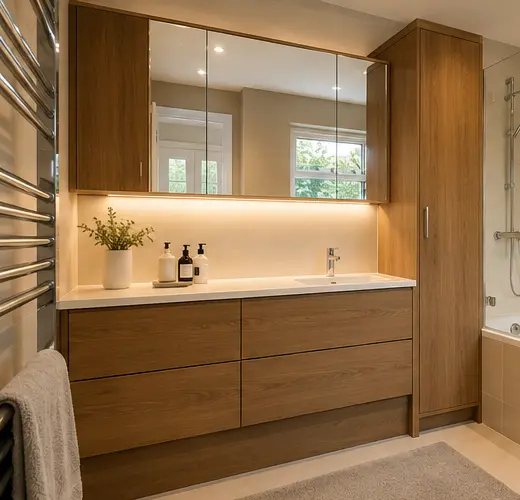
List What Needs to Change
Write down what frustrates you about the current bathroom. Perhaps the shower is difficult to enter, the bath is unused, storage is missing or condensation lingers. This gives your bathroom fitter a clearer starting point than a list of fashionable finishes.
- Who uses the room each morning?
- Which fittings are used most?
- What currently sits out because it has no home?
- Where does water escape or cleaning take too long?
Understand the Existing Layout
Many East Kilbride homes have compact, efficient bathroom layouts. Moving every plumbing point is not automatically an improvement. First test whether different furniture depths, a new screen or a better door arrangement can leave more room to move.
When pipework does need to move, make the decision because it produces a clear practical gain.
Decide Whether to Keep a Bath
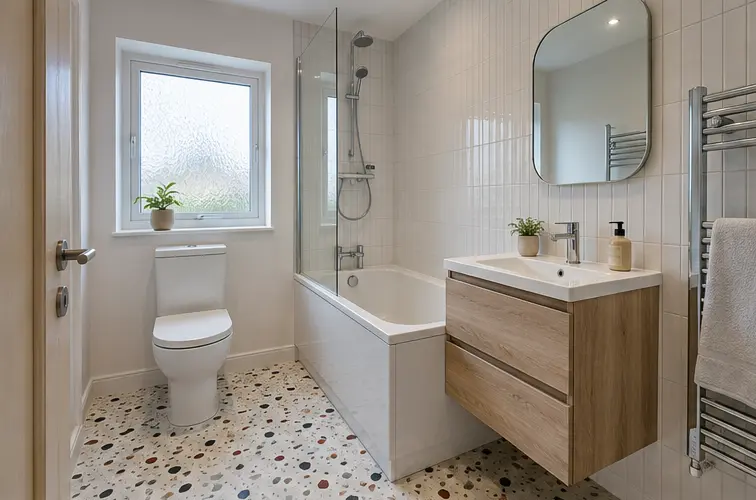
A family bathroom may need to retain a bath, while an owner who never uses it may gain far more from a generous walk-in shower. Think about likely household needs over the next few years, not just this month.
Include Plumbing, Ventilation and Waterproofing
Ventilation, waterproofing, sound walls and floors, accessible valves and safe electrical work help prevent leaks and damage. Make sure these items are included before fitting begins.
Agree the Main Choices Before Work Starts
Choose the main products, finishes and work before fitting begins. A clear plan can reduce delays and helps the furniture, taps, panels and lighting look right together.
Measure the Space You Actually Use
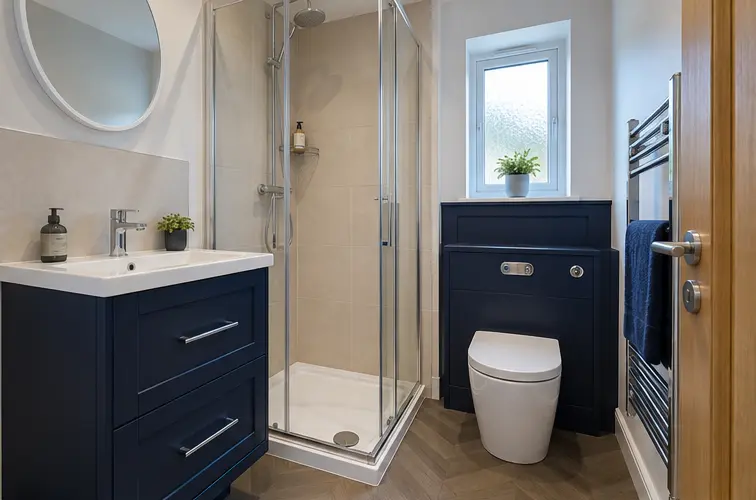
Write down the room’s width and length, then add the doorway, window and any sloping ceiling or boxed-in pipes. Record how the door opens and where the radiator sits. These notes are useful at the first discussion, but the fitter still needs to measure before products are ordered. Do not base an order on a photograph or an approximate online room plan.
Next, look at the space in front of the basin and toilet. Open cupboards and imagine stepping out of the shower with a towel. A wider vanity may offer more storage while leaving too little room beside the shower screen. Marking the proposed outline on the floor can make that conflict easier to spot.
Make a Product List You Can Check
List the main fittings and the smaller parts needed to use them. A bath may need a panel, waste and screen. A basin needs a suitable tap and waste fitting. A shower needs a compatible tray or prepared floor, controls and screen. Ask which of these are included in the supplier’s package and which are separate.
Keep model names, sizes and finishes beside each item. Two products with similar names can have different connections or opening directions. If you change an item after the quote, check whether fitting costs or nearby finishes also change. Having one agreed list is easier than expecting the fitter to work from several saved photographs and shopping links.
Plan How the Household Will Manage
Ask when the toilet, bath and shower will be unavailable. If this is the only bathroom, discuss practical alternatives before a start date is agreed. Do not assume that a toilet can be reconnected each evening; ask what the layout and work allow. Explain any mobility needs or other circumstances that affect access to washing facilities.
Also agree where tools and materials can be kept and how the route through the home will be protected. Mention shared stairs, parking restrictions, pets and children. These details help the team plan deliveries and removal. Keep the agreed arrangements with the quote so the people carrying out the work have the same information.
Agree Changes Before Extra Work Starts
Some floor or wall damage may remain hidden until the old fittings are removed. Ask how the fitter will show you the problem, explain the repair and give its cost. A photograph and written description can help you understand why work is needed. Keep money aside for unexpected repairs rather than using the entire budget on visible products.
Changes you choose yourself should also be recorded. An extra cabinet, a different mirror or moving a shower control may affect more than the product price. Ask for the total change in cost and timing before agreeing. Save the revised plan so an older drawing is not accidentally used during fitting.
Check the Room Before Calling It Finished
At handover, walk through the room with the fitter. Try the taps, shower controls, toilet flush, cupboard doors, mirror lights and fan. Ask how long any sealants need before the shower or bath can be used. The correct waiting time depends on the products fitted, so follow their instructions rather than guessing.
Write down any small faults and agree how they will be addressed. Keep the product details, care instructions and contact information for aftercare. Ask how access panels open and where relevant shut-off valves are located. This gives you the information needed to use and look after the bathroom once the fitting work has ended.
Check Deliveries Before Removal
Confirm who checks the delivered products against the agreed list. Look for the correct sizes, finishes and opening directions, as well as visible damage. Keep packaging until the supplier’s return arrangements are understood. If something is missing or wrong, ask whether the start date needs to change. Finding the problem while the old bathroom still works gives you more choices than finding it halfway through fitting. Keep supplier messages and replacement dates with the project notes so everyone knows what is arriving.
For the fitting work, see Bathroom renovations.